NYC generally requires solid construction fencing. Chain link is the exception, not the default, and it’s only allowed in specific situations. Tell us your site type and we’ll tell you if it qualifies.
Under NYC Building Code §3307.7, any site with new construction, demolition to grade, or open excavation generally must be enclosed with a fence at least 8 feet high, built solid for its full length. Chain link is only permitted where the code carves out a specific exception for it. If your site doesn’t fall into one of the categories below, solid fencing is typically what’s required.
The summary below reflects our understanding of §3307.7 and related local law as of this writing. Code sections, exceptions, and certification requirements can be amended, and eligibility for any exception should be confirmed with a registered design professional, your expediter, or NYC DOB before you rely on it.
See NYC Department of Buildings construction fence requirements
Most active construction sites in NYC need a solid fence regardless of what’s standard elsewhere. The exceptions below are narrow and specific, not general permissions.
Where work has been interrupted or abandoned and discontinued, the Department may approve chain link once a registered design professional certifies that equipment and materials posing a hazard to the public have been removed from the site or safely secured. Before work resumes, the fence generally has to be replaced with solid fencing again.
Our understanding is that under Local Law 74 of 2021, chain link is required in place of solid fencing at sites discontinued for at least two continuous years following that certification. Given how specific this timing trigger is, confirm it directly with DOB before relying on it.
Chain link is also generally permitted to secure portions of a site where a one-, two-, or three-family building 40 feet or less in height is being constructed or demolished, provided the building is set back at least 15 feet from the sidewalk or any space accessible to the public, and at least 5 feet from adjoining buildings or structures.
The same exception generally extends to a commercial building 40 feet or less in height, under similar setback conditions. A commercial project without adequate setback typically doesn’t qualify.
Call service available (718) 750-1381, nights and weekends included.
| Site Situation | Chain Link? |
|---|---|
| Active general construction | Usually no, solid fence is the default |
| Stalled or abandoned work with required certification | Potentially |
| Discontinued 2+ years under applicable provision | Potentially / required confirmed current rule |
| 1–3 family building ≤40 ft with required setbacks | Potentially |
| Commercial building ≤40 ft with required setbacks | Potentially |
| Site doesn't meet an exception | Solid fencing generally applies |
See a ‘Potentially’ next to your situation? That’s exactly the kind of case worth a quick call, we’ll confirm what actually applies to your site.
Dense sites with little or no setback, and active mid-project sites that haven’t stalled, typically don’t meet any of the above. On those sites, solid panel fencing is what the code requires. We deliver and install whichever fence type your site is eligible for.
We don’t file for or obtain DOB approval, and eligibility for the stalled-site exception depends on certification from a registered design professional, not on us.
Which installation method fits your site comes down to two things: what’s under the ground, and how long the fence needs to stay up.
Chain link is available as panel-with-stands, the same free-standing system used for solid panel fencing. Base plates and ballast hold each section in place, so nothing gets driven into the ground and nothing needs patching at pickup.
Where the exception applies and the ground allows it, chain link can also be installed with posts driven into the ground or set in a footing. This gives more rigidity over a longer rental but commits the site to restoration work when the fence comes down.
If your site is paved, has a vault below grade, or sits on a sidewalk-adjacent hard surface, free-standing panels are usually the practical option. If the ground is open and the job runs long, in-ground becomes worth comparing on cost.
Free-standing panels can be picked up and reset in a new configuration on the same site without ground work. In-ground sections can't move without driving new posts, so a site expecting to reconfigure its perimeter is generally better served by panels.
Ground conditions and available space vary significantly by site and borough. Ask us about your specific location when you call.
Everything ships from our Queens yard, and chain link eligibility itself often depends on the kind of site you’re working with, which tends to vary by borough more than people expect.

Dense, tightly set sites are common, which means the setback exceptions for chain link (15 feet from the sidewalk, 5 feet from adjoining structures) are harder to meet here than in less dense parts of the city. Solid panel fencing is more often the realistic option on active Manhattan sites, though the stalled-site certification exception can still apply regardless of borough.
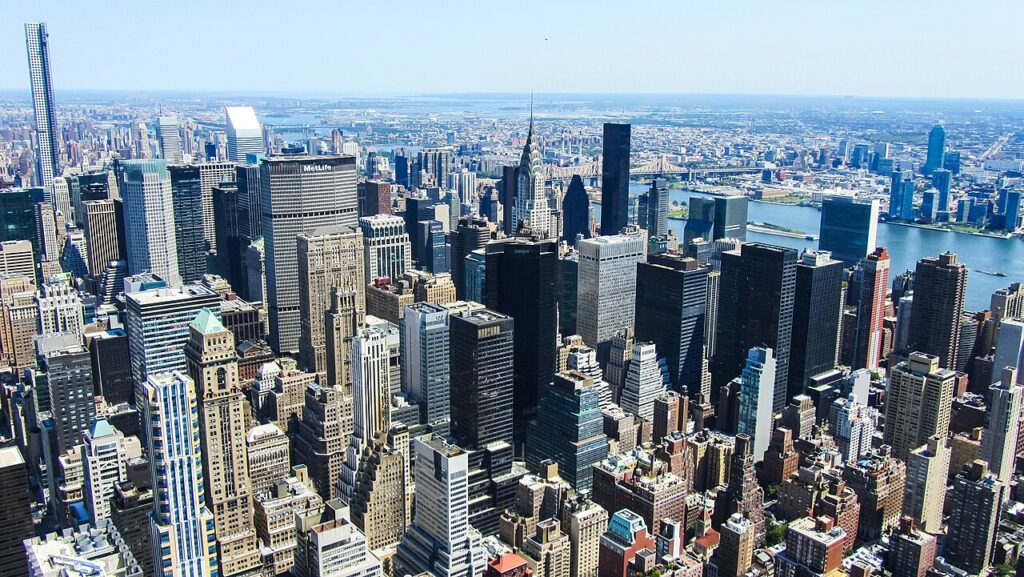
A wide mix of low-rise residential blocks and small commercial buildings means the one-, two-, and three-family exception comes up fairly often here, especially on sites with real setbacks from the street and neighboring structures.

Similar to Brooklyn, low-rise residential and small commercial work is common, and Queens also happens to be where our yard is based, so site visits and quick eligibility checks are usually easiest to arrange here.
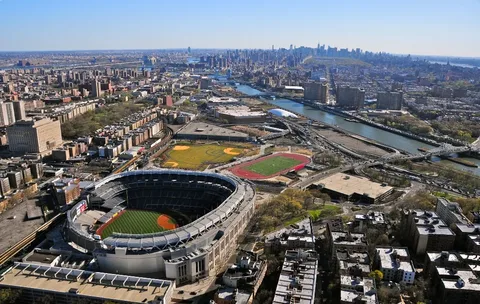
A similar spread of building types to Brooklyn and Queens, and stalled or discontinued sites show up in our service calls here too, worth checking the certification requirement if that describes your site.
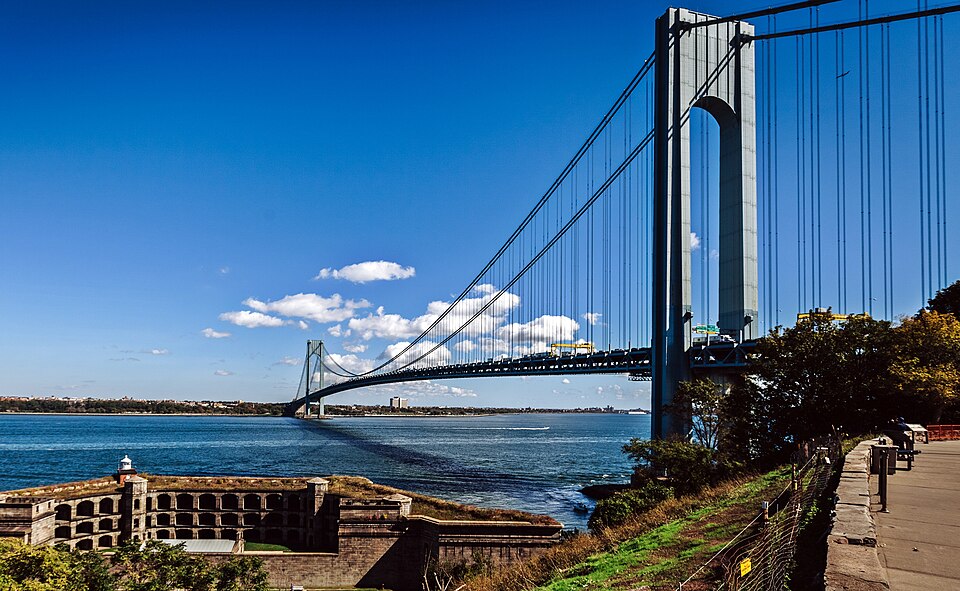
Lower density and more open lots make in-ground chain link installation more practical here than almost anywhere else in the city, ground conditions allow for it more often, and there's usually more room to stage equipment and work with.
For general delivery windows by borough, see boroughs we deliver to. For your specific site’s chain link eligibility, the fastest path is still a call, borough patterns are a starting point, not a determination.
Beyond the eligibility question, chain link carries its own set of material specs, and one requirement most people don’t expect.
Chain link installed under these exceptions generally still has to meet the same 8-foot minimum height required of any construction fence under §3307.7. The exception changes the material, not the height requirement.
Our understanding of §3307.7.4 is that chain link fencing must be made of new materials, or salvaged material in good condition, with galvanized steel posts and woven galvanized steel wire mesh strong and rigid enough to prevent access to the site. Exact gauge and aperture depend on current stock and current code. Confirm specifics when you call.
This is where chain link differs from solid panel fencing in a way most people don’t expect: windscreen generally isn’t an add-on here, it’s a code requirement. Our understanding of §3307.7.4 is that chain link fencing and gates must be covered with an opaque, sturdy windscreen fabric, securely attached and kept neat, rigid, and taut for the length of the installation.
Chain link isn’t simply cheaper temporary fencing, an approved chain-link configuration in NYC carries its own material and windscreen requirements that solid panels don’t.
Gates generally have to be made of the same material as the fencing. Confirm gate width and barbed arm availability at the time of booking.
Chicken wire is a lightweight hexagonal mesh meant for garden beds or small animal enclosures. It doesn’t meet the strength or rigidity code requires and isn’t an accepted substitute on a regulated construction site.
Panel count and post spacing come from your site’s linear footage and ground conditions, not a flat estimate. A site survey ahead of delivery confirms whether the surface can take post-driven installation or needs the free-standing system instead.
Everything ships from our Queens yard as part of our five-borough fence and barrier rental operation, so lead time depends on your borough and how much notice we have. At pickup, panel sections come down with no ground work involved; in-ground sections come out along with any restoration the surface needs.
Don’t know whether you qualify? Give us three facts: is work active or stalled, how far the building sits from the sidewalk and neighboring structures, and how long you need the fence up. We’ll tell you what we understand to be permitted, and point you to DOB or your expediter to confirm before you finalize your plan.
Only in specific situations, and eligibility should be confirmed directly with DOB or your design professional. Our understanding is that §3307.7 requires solid fencing by default, with chain link permitted where work has stalled and a registered design professional certifies the site has been secured, or to enclose portions of a one-, two-, or three-family building or a commercial building 40 feet or less in height with adequate setback from the sidewalk and adjoining structures.
Until a registered design professional certifies that hazardous equipment and materials have been removed or secured, the site typically still needs the standard solid fence. We can supply either once you know which applies.
Generally, no. Our understanding of §3307.7.4 is that chain link fencing must be covered with an opaque windscreen fabric, kept neat and taut for the length of the rental. Confirm current requirements with DOB if you're unsure.
Free-standing systems sit on base plates held down by weight and don't touch the ground, so they work on paved lots and sidewalks. In-ground systems use driven posts, which need diggable ground and more space to install.
Solid panel fencing is the fallback for any site that doesn't meet one of the exceptions above. See our temporary fence panel rental page.
Chain link rental cost depends on linear footage, installation method, rental duration, gates, windscreen, site access, and whether posts need to be driven and later removed.
Fence panels, chain link, and Jersey barriers from one Kew Gardens yard, delivered across all five NYC boroughs, often same-day. 24/7 emergency response, $2M general liability coverage. Serving NYC contractors since 2004.